
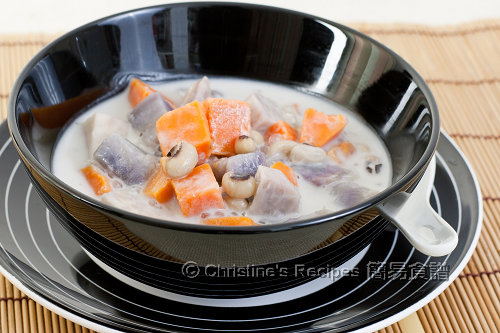
This traditional Malaysian Bubur Cha Cha recipe brings the ultimate comfort of Nyonya sweet soup straight into your home kitchen, delivering an incredible balance of creamy coconut cream and aromatic pandan leaves. Cooking with pure, fresh ingredients allows us to slow down, practice mindful nourishment, and create a vibrant dessert that fills the house with hospitality and warmth. With its colorful blend of golden sweet potato, purple sweet potato, yam, chewy sago tapioca pearls, and soft black-eyed beans, every bowl feels like a rich celebration of life's simple, delicious moments.
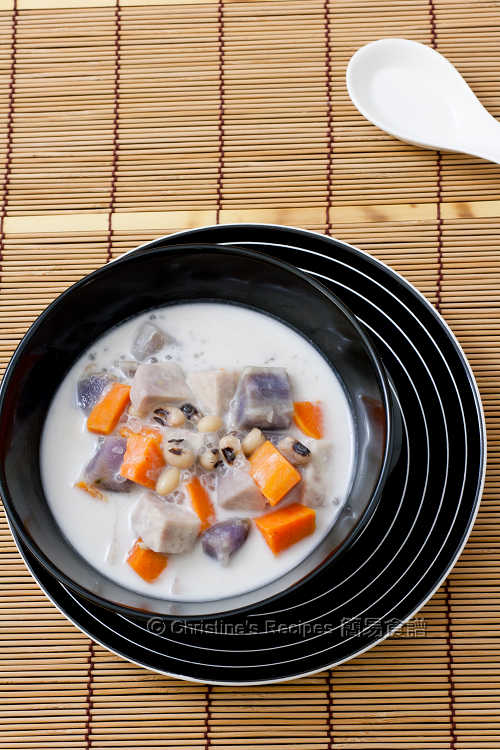
Our goal with this easy Southeast Asian dessert is to embody the philosophy of "Easy, Gorgeous, Delicious" (快靚正)—delivering restaurant-quality flavor through an effortless cooking routine. Whether you enjoy this comforting sweet soup piping hot on a cool evening or chilled over ice during summer, it offers complete balance for body and soul. By steaming the root vegetables separately and crafting a smooth, pandan-infused coconut milk base, you achieve a gorgeous visual presentation and a perfect harmony of textures in under an hour.
Why You'll Love This Recipe
- Vibrant Multi-Texture Experience: Combines soft steamed yam, tender sweet potatoes, chewy tapioca sago pearls, and hearty black-eyed beans in every bite.
- Aromatic Coconut Pandan Soup: Simmering knot-tied pandan leaves in rich coconut milk creates an authentic, irresistible sweet fragrance.
- Versatile & Crowd-Pleasing: Can be served hot, warm, or chilled, making it ideal for family gatherings, seasonal celebrations, or quiet self-care treats.
- Effortless & Efficient Prep: Streamlined steaming and boiling techniques ensure vibrant natural colors without making the coconut broth cloudy.
Key Tips for Success
- Steam Root Vegetables Separately: Always steam the diced purple sweet potato, golden sweet potato, and yam instead of boiling them in the soup to prevent the purple pigments from discoloring your creamy coconut milk.
- Master the Tapioca Pearls: Turn off the heat as soon as the sago water comes back to a boil, keeping the lid tightly covered so the residual heat cooks them through. Rinse under cold running water immediately to stop cooking and keep them clear and chewy.
- Prevent Oxidation: Keep your diced sweet potatoes submerged in a bowl of cold water while prepping to prevent them from turning brown or black before steaming.
Bubur Cha Cha Recipe
(Printable recipe)By Christine’s Recipes
Course: Dessert
Cuisine: Chinese, Asian
Prep time:
Cook time:
Yield: 3 to 4 serves
- 150 gm yam (taro), peeled and diced
- 150 gm golden sweet potato
- 150 gm purple sweet potato
- 50 gm black-eyed beans (black-eyed peas)
- 50 gm tapioca pearls (sago pearls)
- 1 liter boiling water, plus more to cook beans and tapioca pearls
- 120 gm rock sugar or coconut sugar, finely chopped, or to tast
- 1½ cup coconut cream, or to taste
- 3 pandan leaves
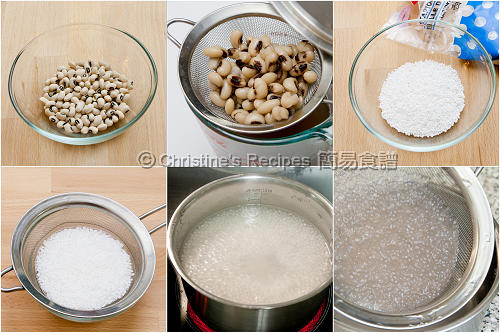
- Rinse the black-eyed beans and drain well. Soak in boiling water with cover for 15 to 20 minutes. Drain and put into a large pot of boiling water. The water should cover the beans up to at least 2 inches. Bring it to boil. Reduce heat to simmer over medium-slow heat until softened, but not mushy, about 20 to 30 minutes. Drain well and set aside.
- Soak tapioca pearls for 10 minutes. Drain and transfer into a pot of boiling water. Cover and cook over medium heat until it boils again. Immediately remove from heat. Don’t remove the pot lid. Let the residual heat inside to cook for further 10 minutes. Drain through a fine sieve. Rinse with running cold water. Drain well. The tapioca pearls should be translucent and retain their shapes. If some of them still have a white spot in the middle, they are not cooked through completely. It’s fine because you need to cook them with coconut milk later.
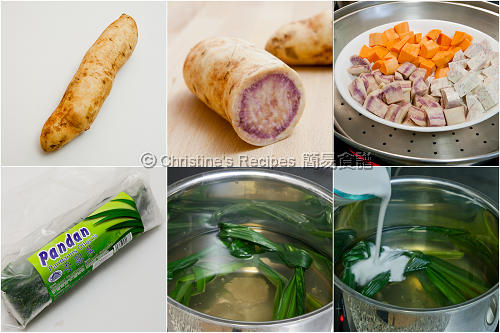
- Steam diced yam, golden and purple sweet potato in a wok over high heat, until softened, about 20 minutes. Test with a sharp knife or toothpick. They should be very easy to prick through.
- Use a large deep pot. Add 1 liter of boiling water with the rock sugar. Bring it to boil. Add pandan leaves. Reduce heat to simmer for 10 minutes. Pour in coconut cream. Once it boils again, drain up and discard the pandan leaves. Add the sweet potatoes, black-eyed beans, tapioca pearls. The rock sugar should be dissolved completely. Taste and add more sugar if needed. Served hot. Or let it cool down and chill in fridge if you like it served cold.
Notes:
- The consistency of every brand of coconut cream is very different. You can adjust the amount to your liking.
- Choose different colours of sweet potato to make this dish more colourful and attractive. The diced sweet potatoes will turn black if they are not cooked immediately. Soak them in water to avoid from turning black in colour.
- You can put the diced sweet potato in water to cook until softened instead of steaming. But beware that the purple sweet potato will turn your sweet coconut soup into purple. That’s why I used steaming.
I'm so glad you posted this recipe. A restaurant near my college used to serve this as a special treat on Saturdays and I always loved it. Thank you!
ReplyDeleteIs this also called "mo mo cha cha" ? I've eaten this at a Malaysian restaurant here in the States and it was not listed as bubur cha cha. Anyways, thank you for the recipe! It will be fun to try at home :)
ReplyDeleteChristine, I really want to purchase your cookbook. Is there anyway you can sell your book at ebay or amazon.com? ET's website is written in Chinese and the currency is also another issue for me.
ReplyDelete@MD:
ReplyDeleteIn chinese, we call it "mo mo cha cha" (摩摩喳喳).
@Anonymous:
ReplyDeleteSorry, not on amazon or ebay yet.
Here's the english online order page of my publisher. They put up demo with english instructions as well. Hope it helps.
Thank you for your support.
I have not tried the version with bananas and black-eye beans :p ....it usually just sweet potato, yam and sago :)
ReplyDeleteAaah...yes....this is our Malaysian favourite dessert! Some will drizzle some palm sugar on top to give it different taste and aroma sweetness.
ReplyDeleteWell done Christine. I love bubur cha cha. I'd put all of your ingredients plus banana for a bit of tang.
ReplyDeleteIf anyone wants Christine's recipe book, I found it on Yesasia as well (I had trouble purchasing it on the site of her publisher's as well xD)
ReplyDeletehttp://www.yesasia.com/us/easy-recipes-a-selection-of-simple-classics/1031073816-0-0-0-en/info.html
Though the price seems to be higher I believe.
When you sell your book on can sell your book at ebay or amazon.com? Please let us know. We will get on and buy it from there. Thanks, Christine. I love your recipes!:)
ReplyDeleteJust received your book from Yesasia.com (in 2weeks)they also accept Paypal, don't be afraid to order from them, it was my first time and it was a smooth transaction. Christine,Your book is Fabulous! Lots of Favourites, just like home cooking and Dim Sum. Have to cut down on eating and start sharing.Can't wait for your next book! Do you have a recipe for Steamed Chicken/vegetable Buns with the quail egg?
ReplyDeleteKim
Oh, their delivery was so speedy. Thanks for your feedback and kind words.
DeleteJust got a recipe of steamed pork buns on this blog. Please click to see if you like it. You might like to watch my video of how to wrap a chinese bun as well.
Christine, sorry to ask you, are you sure we have to soak the sago for 10 minutes. Drain and transfer into a pot of boiling water ? I have not try your recipe as I wanted to cook it on the 15th day of CNY. I did soak my sago, it became a bowl of white sago powder water and can't find any sago in it any more. My friend laughed at me and she said we MUST boil them for a few mins then soak them in boiling hot water not cold water. Boil for 5 mins or depends on the size -- big or the tinny one. After that my sago came out as pearl by stand in the hot water after boiled for a few mins. If big one, stand then stir and boil again for 2-3 mins, cover and stand for 20 mins and check and repeat until no more white spot in the center.
ReplyDeleteWould it be the different results made from different brands of sago?
DeleteMine wouldn't become powder after soaking, just a bit of starch came out from the surface. See the pictures on the post. That's exactly what I did and what I got.
Feel free to adapt the method of cooking sago according to the packet instructions or your experience. The main purpose is to get the sago cooked through. There's no right or wrong ways, only suitable ways.
May I know if this prepared dessert would taste sweet or salty? Thanks for reply.
ReplyDeleteIt tastes sweet. You need to add rock sugar or coconut sugar.
Deletewhich brand of coconut milk is best to used?
ReplyDeleteI used Kara UHT coconut milk. You can use any brand that comes in handy to you or your favourite one.
Delete